Integrating 50 Tree Bark Photoshop Stamp Brushes into Professional Digital Workflows
In the realm of digital design, texture is not merely an aesthetic choice; it is a fundamental component of visual credibility. Whether you are crafting a high-fidelity game environment, designing a rustic brand identity, or manipulating photographs for editorial use, the absence of organic detail can make a composition feel sterile and artificial. This is where specialized assets like 50 Tree Bark Photoshop Stamp Brushes become indispensable tools in a creator’s arsenal. These brushes are not just simple stamps; they are high-resolution resources designed to bridge the gap between flat digital layers and tangible, natural reality.
Understanding how to effectively implement these brushes requires more than just downloading and clicking. It demands a strategic approach to workflow integration, ensuring that each application enhances the project without compromising performance or visual coherence. For professionals ranging from graphic designers to digital painters, mastering these tools can significantly reduce production time while elevating the final output quality.
The Technical Foundation: Resolution and Compatibility
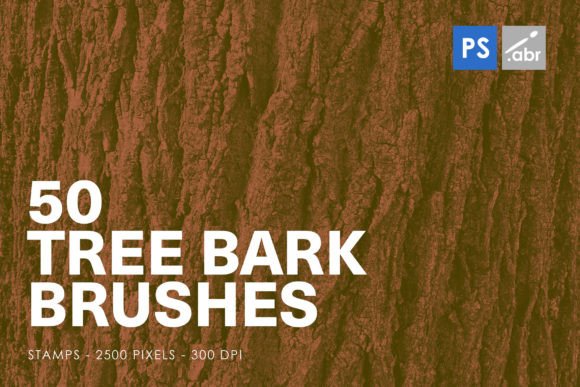
Before diving into creative applications, it is crucial to understand the technical specifications that define the utility of this brush set. The 50 Tree Bark Photoshop Stamp Brushes are engineered with a resolution of 2500 pixels. In practical terms, this high pixel count ensures that the textures remain crisp and detailed even when scaled for large-format prints or high-definition screens. Low-resolution brushes often pixelate or blur when enlarged, forcing designers to seek alternative solutions mid-project. With 2500-pixel assets, you maintain flexibility throughout the design process.
Compatibility is another critical factor for seamless integration. These brushes are optimized for Photoshop CS2 through CC All versions. This broad compatibility ensures that whether you are working on a legacy system in a small print shop or utilizing the latest Creative Cloud features in a modern agency, the tools will function without error. This universality removes technical barriers, allowing teams with varied software setups to share files and collaborate efficiently. When selecting assets for a long-term library, such backward and forward compatibility is a key indicator of value and reliability.
Strategic Placement in the Design Workflow
Integrating tree bark textures into your work should be a deliberate step within your broader creative process. These brushes can be applied at various stages, depending on the desired outcome and the nature of the project.
Pre-Production and Conceptualization
During the initial planning phases, these brushes serve as excellent mood-setting tools. Before committing to complex 3D modeling or detailed photo manipulation, designers can use the stamp brushes to quickly block out textures and establish a visual tone. This rapid prototyping helps stakeholders visualize the organic feel of a project early on, facilitating faster decision-making regarding color palettes and lighting directions.
Active Design and Manipulation
In the execution phase, the brushes transition from conceptual aids to functional components. For digital photo manipulation, they are used to blend subjects into natural environments. If you are compositing a character into a forest scene, painting subtle bark textures onto surrounding elements can help unify the lighting and perspective. Similarly, in graphic design, these stamps can be used to create custom borders, background patterns, or distressed effects that add depth to typography and layout structures.
Post-Production and Refinement
Finally, during the review and refinement stage, these brushes act as corrective tools. If a digital painting feels too smooth or synthetic, applying a subtle bark overlay can break up uniformity and add necessary noise and grain. This step is vital for achieving a photorealistic finish, as perfect smoothness rarely exists in nature. By adding these imperfections intentionally, you enhance the perceived realism of the artwork.
Diverse Applications Across Industries
The versatility of the 50 Tree Bark Photoshop Stamp Brushes allows them to fit into numerous professional contexts. Their utility extends far beyond simple landscape painting.
- Digital Game Development: Environment artists can use these stamps to quickly texture low-poly models or create decal sheets for terrain details. This accelerates the asset creation pipeline, allowing developers to focus on gameplay mechanics rather than getting bogged down in repetitive texturing tasks.
- Brand Identity and Marketing: For brands emphasizing sustainability, organic origins, or rugged durability, bark textures provide an immediate visual cue. Marketers can use these brushes to create textured backgrounds for social media graphics, product packaging mockups, or website headers, reinforcing brand values through tactile visual language.
- Educational and Editorial Content: Publishers and educators creating materials about botany, ecology, or forestry can use these high-resolution stamps to illustrate specific tree species or to create engaging, textured layouts that capture reader attention. The clarity of the 2500-pixel images ensures that educational diagrams remain legible and accurate.
- Textile and Surface Design: Fashion and interior designers can utilize these brushes to simulate wood and bark patterns on fabrics, wallpapers, or furniture finishes. This allows for rapid visualization of material choices before physical prototypes are produced.
Best Practices for Implementation and Quality Control
To maximize the effectiveness of these brushes, adherence to certain best practices is recommended. First, consider the layer structure within your Photoshop document. Always apply stamp brushes on separate layers. This non-destructive workflow allows you to adjust opacity, blending modes, and masks independently of the base image. Using blending modes such as Multiply, Overlay, or Soft Light can help integrate the bark texture naturally with underlying colors and shadows.
Organization is key when managing a set of 50 distinct brushes. Take time to rename and group them logically within your brush panel. Categorizing by bark type—such as rough, smooth, fissured, or moss-covered—can save significant time during active projects. Efficient organization reduces cognitive load, allowing you to maintain creative flow without interrupting your work to search for the right tool.
Furthermore, pay attention to scale and perspective. A common mistake is applying textures at a uniform size regardless of the object’s distance from the viewer. Adjust the brush size dynamically to match the perspective of your composition. Closer elements should feature larger, more detailed bark patterns, while distant elements should have smaller, subtler textures. This attention to spatial consistency enhances the three-dimensional illusion of your work.
Long-Term Value and Asset Management
Investing in high-quality brush sets like the TREE BARK PHOTOSHOP STAMP BRUSHES FOR PHOTOSHOP CS2 – CC All versions is a decision that pays dividends over time. Unlike single-use templates, brushes are reusable assets that become more valuable as you learn to manipulate them in different contexts. They form part of a sustainable design toolkit, reducing the need to source new textures for every project.
For freelancers and small business owners, efficiency directly impacts profitability. By streamlining the texturing process with pre-made, high-resolution stamps, you can reduce billable hours spent on manual detailing. This efficiency allows you to take on more clients or dedicate more time to high-level creative strategy. Additionally, maintaining a consistent library of trusted assets ensures a standard of quality across all your deliverables, building trust with your audience and clients.
In conclusion, the 50 Tree Bark Photoshop Stamp Brushes are more than just a collection of images; they are a functional resource for enhancing realism, speeding up workflows, and adding organic depth to digital creations. By understanding their technical specifications, integrating them strategically into your design process, and adhering to best practices for application, you can unlock their full potential. Whether you are a seasoned professional or a hobbyist looking to elevate your craft, these tools offer a practical solution for achieving high-quality, textured results in any Photoshop-compatible environment.